Showing posts with label roald dahl. Show all posts

Wednesday, 24 June 2015

Why I'm going back to the classics...for a while

Hi!

Over the past two years I've spent oodles of time  trying to read as many new books as possible, and review my favourites, mainly  to help me remember the details! As a slushpile writer on a mission to Get Somewhere, I've been very conscious of what agents and publishers are currently looking for. I've spent hours researching how to get to grips with the obligatory "Show, Don't Tell" and I've acquainted myself with the market's bestsellers. The  amazingly original and exciting books that I've read have brought me and my children lots of joy and fun. Thank goodness we have a constant supply of new ideas and authors coming through.

It is confusing though. I've read my own children every single one of David Walliams' thoroughly entertaining books. Somehow these bestsellers  have a really old-fashioned feel, but I love them! Walliams' style feels so warm and comforting and familiar, and in a  Dahl-esque manner  he whips us from the horrific to the absurd in the flick of a page turn. Tell the truth, I've missed that kind of story telling. They're so good to read aloud, and even better to listen to. So now I'm hankering for some proper Old Skool Classics that have stood the test of time. And by "classic" I don't necessarily mean old, I mean books that will be loved from generation to generation and stand the test of time.

Whenever I visit local bookshops, I'm struck by just how many books in the 8-12s section are largely the same books that I was plugging 15 years ago as a Year 6 teacher. I'm talking the likes of Harry Potter, Northern Lights, Kensuke's Kingdom and Matilda. A quick look at the British Libraries PLR listings reveals that the most borrowed children's authors Top 20 still includes Roald Dahl and Enid Blyton, and in the Top 20  most borrowed classic authors you'll also find CS Lewis and Beatrix Potter.  There's a steady supply of new editions of the classics it seems- each new cover design seems to cause a stir!

One thing that bugs me as a teacher is that children tell me -all too often- that their parents won't let them read the books they want to, deeming them 'too easy', or 'not  good English'. I've overheard parents at the supermarket trying to persuade their children to buy books or magazines that "teach them something" rather than the ones the child is drawn to.  And I recently joined in a teacher's hashtag about reading, where  teachers were recounting the lack of time in the school day to read for pleasure.  'Up-levelling' is where it's at, and being able to prove a pupil's progress to Ofsted inspectors.  Fads and fashions in the publishing world may come and go, but teachers and parents often seek the confidence of known quantities when it comes to reading material. Not to mention guaranteed value for money. As adults we  love to share our own childhood favourites with the next generation, and these are often what we select as special gifts. For busy teachers there is a much greater wealth of resources for more established authors to enrich and support their lesson plans, so who can blame them for picking more classic texts to use in class?  Canny debut authors, I notice, are putting resources for teachers on their websites- a good move!

This set me thinking, as lately I've been reflecting upon what I want to achieve with the Middle Grade books that I'm currently writing, and indeed, what is at the heart of Middle Grade fiction. Is it the characters? The plot? The voice? I often wonder why I've focused on writing for this age group above all others, and always reach the conclusion that this was the age when I was happiest in my reading, and found stories most satisfying.

So, I've decided to embark on a journey back through time, and revisit the books I enjoyed as a junior reader (as we called it back in Ye Olden Days) . A couple of months ago I re-read Madeleine L'Engle's "A Wrinkle in Time" and it brought back the thrill and excitement of disappearing into a whole new imaginary world, just as when I'd read it as a youngster. But yes. The world is very different now with technology and social media, and kids being much more knowledgeable and worldly wise. On the other hand though, the relevance and importance of things like relationships with friends, siblings, parents, and the dull oppression of homework hasn't changed much. Kids still have days when they're gleeful, and days when they're sad.

This led me into thinking that if I re-read books from my school days, could it help me re-connect with my Middle Grade self?  Maybe, if I read my favourite books from childhood , I'll be able to resurrect long dismissed memories. Maybe  I'll hit upon a cerebral shortcut to the Land of Long Ago, which will magically help me write a more sparkly authentic voice for my intended audience.

Over the weekend I was looking out for interesting tweets from the Winchester Writer's Festival, and a lively selection kept popping up. One that caught my eye was a quote from Beverley Birch saying, "as an author do not bandwagon hop. Write what's in your heart ".

So, without apology I'm going back to my favourite characters: Ramona, Laura Ingalls Wilder, Anne of Green Gables, Mary Poppins. I'm going to scrutinise The Wolves of Willoughby Chase, and Nothing to be Afraid of. I'll be analysing The Borrowers and Ballet Shoes and The BFG.  I admit that -unlike my younger self- I'll be tutting at the liberal sprinkling of adverbs, and the naughtiness of the lengthy backstories, but that will be part of the fun. Over the next few months (before I get back to reading all the latest bestsellers) I'll be seeking to pinpoint what  the essence of a truly great Middle Grade book is, so that I can bottle it and keep it close to my heart as I'm writing.

I just hope (with writerly wishfulness) that  I will discover the Holy Grail of what makes these evergreen books so endlessly appealing, and will one day be able to achieve a little of the classic magic in my own stories.

Pippa Wilson

Friday, 24 April 2015

Rings, Wardrobes and Magic Mushrooms


Magical Objects in Middle Grade Fiction


I am lucky enough to be spending quite a bit of time in schools at the moment, talking to children about creating magic in writing. One of the first things I ask them to do is to shout out their favourite magical object in any book they’ve read. I stand poised to write the answers on the whiteboard and often there’s a hesitation – not because no one can think of an answer, but because they’re wondering where to start. A fraction of a second later, when I hear that first cry of “Harry’s wand!” or "the Wishing Chair!" the flood gates open and the workshop is carried away on a tide of fantastical artifacts.


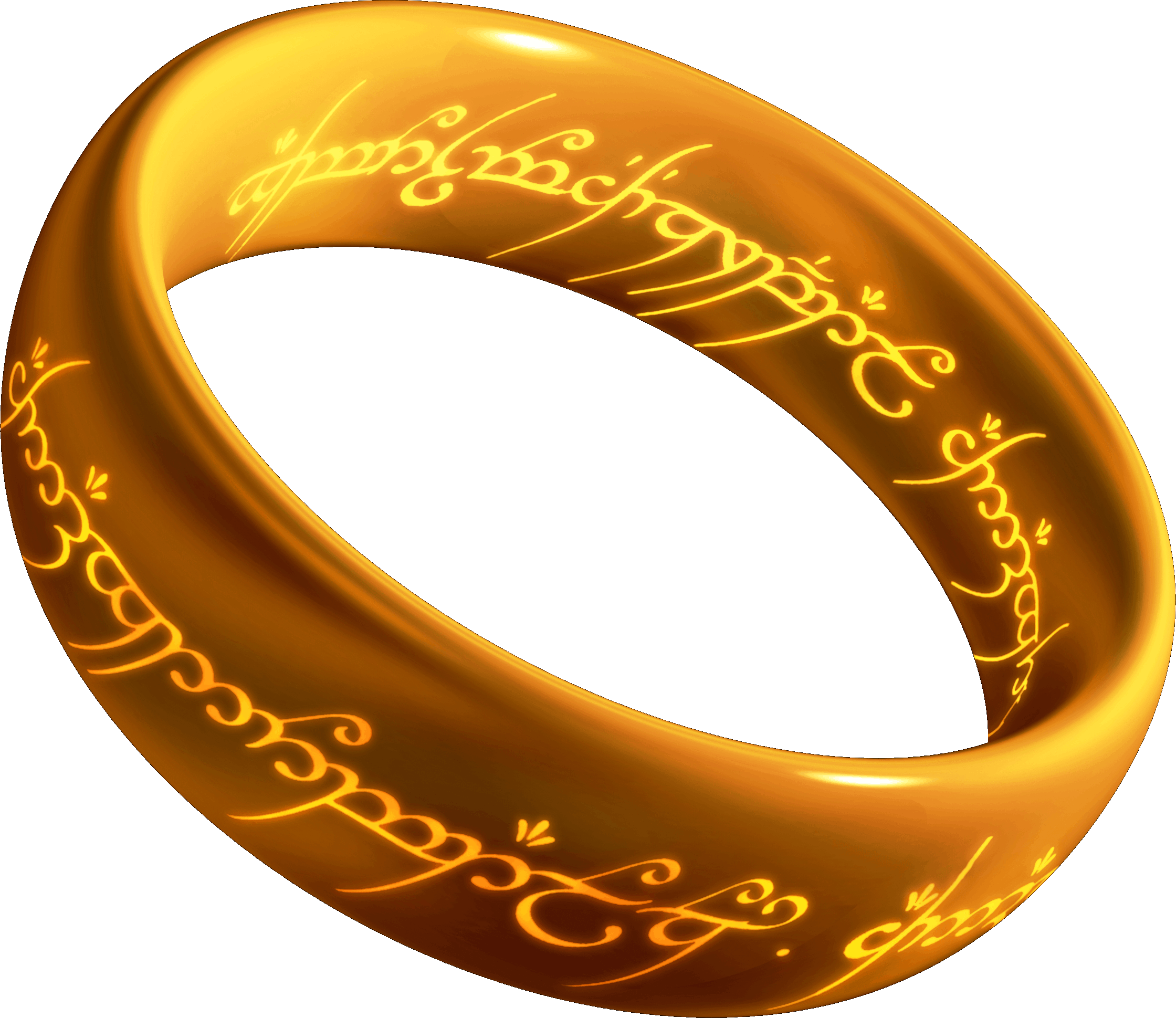
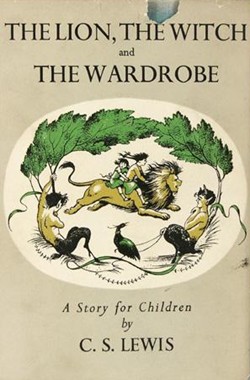
Often the first in that flood are those from the titles of the classics, like the wardrobe in The Lion, the Witch and the Wardrobe, the ring of The Lord of the Rings and the Faraway Tree in, well, The Magic Faraway Tree. Sometimes there are other iconic objects from the classics like the magic mushroom in Alice in Wonderland, the grandfather clock in Tom’s Midnight Garden and the book in The Neverending Story. Usually there are more recent ones like the Alethiometer in His Dark Materials or Percy Jackson’s sword, Riptide. Sometimes we get lost in the wondrous inventory of a single title, like Charlie and the Chocolate Factory, and I’ll be kept busy at the whiteboard with chocolate waterfalls, Television Chocolate, Everlasting Gobstoppers and the like. Of course one title – or set of titles – offers the best hunting ground, and normally the session contains a deluge of objects from the pages of Harry Potter, from the Invisibility Cloak and broomsticks, to the Marauder’s Map and Horcruxes. Very soon I am running out of whiteboard space, and I call for mercy.

And then we look at my scrawl, and congratulate ourselves on knowing an awful lot of magic. I try to make my fledgling magicians feel even more chuffed with themselves by telling them that if I had done the same thing with a room full of adults, the list would be no longer (perhaps shorter), and it would contain many of the same artifacts. Why? Because literature for this age group – our very own Middle Grade – excels at magical objects. Middle Grade is the heartland of the fantastical Thing. This is where we find the looking glasses and glass elevators and boxes of Turkish delight that fire our imaginations and refuse to leave us, that create an impression so vivid and fond that they enter our very definition of magic. Try it on your parents, I tell them, try it on your teacher! Ask them to name their favourite magical objects, and I wager that many if not most of them will come from books written for you.
Isn’t that exciting, I say, that it is the books written for you that create some of the most powerful magic. What does that say about your imaginations? Your capacity to create magic in your minds?

And isn’t that exciting for us, we who write some of these books, and work with them, and teach them, and read them with our children. Of course all this raises the question, why is Middle Grade so good at creating these magical objects? And how does it do it?

Well, I’m not sure there are definitive answers to those questions, and I wouldn’t presume to try to offer any, but I do of course have some thoughts on the subject. I have to have some thoughts – I’m still only half way through my workshop. It strikes me that Middle Grade occupies that happy and fertile ground between the unfettered imagination of young literature and the more sophisticated and realistic stories of YA and adult literature. Middle Grade can do imaginative – our lists prove that beyond a doubt – but the genre marries the richly imagined with sophistication and realism. Let me give some very quick examples.

Consider the moment Lucy first enters Narnia in The Lion the Witch and the Wardrobe. Lucy’s journey through the wardrobe is simply but carefully described so that it is immersive and real. As she enters the wardrobe, Lucy uses almost all of her senses, feeling the furs against her skin, smelling the mothballs, hearing the crump of snow under her feet, seeing the light of day somewhere up ahead. The whole episode is skillfully created to feel plausible, so that the magic itself is almost undeniable. It is an example of how even here, towards the younger end of Middle Grade, a more sophisticated narrative and a healthy dose of realism lift the magic to new heights.  

While we’re here in the wardrobe, it’s worth reflecting on the types of object that make the best magical artifacts. The wardrobe is a very good example of how something very everyday and real can be developed into something of extraordinary power, both in terms of magic and literary importance. It may be harder to make a wardrobe seem magical – and that’s where the skillful writing is very important – but when done as brilliantly as Lewis did it, it places a portal to another world in every house across the land. The wardrobe made Narnia seem close and accessible to us all. It is the very humdrum realism of wardrobes, mushrooms, rings, rabbit holes, looking glasses, peaches and train platforms that make them the ideal starting point for immersive magic. If the writing is good enough – and in Middle Grade it really can be – these real things make the magic immediate, tangible and very nearly true.

 
Realism can be achieved in other ways, of course. Take, for instance, the Alethiometer of His Dark Materials. Here the object is superficially ordinary: it is described as “very like a clock, or a compass, for there were hands pointing to places around the dial”. But in every other way, it is peculiar and extraordinary. The hands reveal the truth to the bearer by pointing to symbols around the dial, each of which has several meanings. The symbols are reminiscent of those from the Tarot and other cultural and historical sources – and so in combination they give the impression of the authority and wisdom of the ages. In this way the Alethiometer commands a very powerful and compelling magic not only for Lyra but also for the reader. In its sophistication and sense of heritage, it feels as though it really could be telling the truth. Other Middle Grade writers use complexity and heritage to give the sense of realism. Take for instance the construction and history of the Elder Wand in Harry Potter, or the very long and involved history of the One Ring in The Lord of the Rings. Again, the wonder of these objects is not only in what they can do, but also how in real they seem. And with such a rich and seamless history, how could they not be real?

And so, back in the workshop, we have talked about all this for a while, and it’s the kids’ turn to make some magic. This is where I bring out my prop: a box of Things. Now this is no ordinary box, it is a box from The Shop of Things, a creation of my own book The Bell Between Worlds. As such, the shop isn’t actually real, but those powerful imaginations are already hard at work and when I produce my old crate overflowing with straw, it hardly matters whether the shop is real or not, or indeed whether or not the class has read my book! They’re ready to believe. And then they come and take out their strange objects (which my family and I have collected from around the world), take them back to their tables and get to work. What do they have to do? Well yes, they have to imagine its magic, think about what it might do if spoken to, rubbed, sniffed, blown, dropped or thrown. But when they come to write this down, they also have to make it real. They write down what it looks like, sounds like, smells like – all those things – but they also capture its heritage, its story. They ask themselves who made it? Where? Why is it dangerous? Who is trying to steal it? Whose life has it saved? And suddenly, right there beneath the tip of their pen, the magical Thing starts to come to life.

It has been such a privilege to see what those imaginations are capable of – creations conceived so quickly and effortlessly, and yet many of which are worthy of the best Middle Grade fiction. As a writer in the field, it’s a reminder of how hard I need to work to be worthy of this inspired readership. The next time I sit down to create my own magical Things, I know they need to be very, very good. 

www.ianjohnstone.com

Tuesday, 21 April 2015

Teachers in Middle Grade Fiction: The Trunchbull-Honey Scale


I’ve always wanted to be a primary school teacher and part of my motivation for this was the wonderful Miss Honey from Matilda. She was young (only 23), pretty and just so kind. Her wonderful teacher fashion sense of simple tops, pencil skirts and lovely flowing scarves probably influences my work style even now. I absolutely wanted to be her- not just for the thrifty but stylish wardrobe, but mainly for her sheer enthusiasm for teaching and encouraging children.
Now, as a grown woman, I realise that Miss Honey is not necessarily a realistic role-model for a young teacher. First of all, she didn’t really need to use any behaviour management strategies because the children behaved so well simply because she was just a lovely person. Ah, if only! It just doesn’t work like this. Also, if the story was written these days Miss Honey’s actions towards Matilda (taking her home, getting involved in family disputes) would definitely be contrary to safeguarding guidelines. If the story was written nowadays it would probably involve Miss Honey ringing social services and ensuring that the correct authorities took control.
I realise that Miss Honey was not necessarily meant to be a realistic model of a teacher but instead an idealistic view of what a child’s dream teacher would be- kind, encouraging, pretty, interested in you as a person. In fact, when I looked again at the representation of both Miss Honey and Miss Trunchbull I realised that these characters are the personification of teacher behaviours (albeit teacher behaviours with the volume turned up to the max). Dahl presents us with the shouty, scary, strict, borderline-evil Miss Trunchbull as a diametric opposite to the lovely, kind, soft-spoken Miss Honey. In these two characters we have the idealised teacher and the demonised teacher- basically as a young child would see a teacher (good/bad... very little grey area).
 In the real world, no teacher could be exactly like Miss Honey. We need to have both reward and sanction systems, we need to have procedures in place for when children are rude/naughty. However, that doesn’t include chucking those children out of the window by their pigtails. From a child’s point of view though, the portrayal of the two teachers does borrow from their sense of realism.  To kids, teachers are judged on two different scales- whether we can manage the class and whether we are kind or mean to them.  It's a simplistic view which changes as they get older to include more grey areas and allows for a combination of behaviour management and temperament. 

When I think of Mr Hawtrey in The Boy in the Dress I would plot him as high on the aggressive behaviour management side (not as high as Miss Trunchbull) but mean (and hypocritical) whilst Rory's class teacher isn't particularly effectual (Rory ends up pushed in the river) and isn't particularly understanding or kind towards him. 
Middle Grade fiction depicts teachers from the child's point of view... so in honour of this I give you The Trunchbull-Honey Quadrant Scale.

So... who would be your dream MG-fiction teacher and who would be your nightmare?
Where would you plot them on the scale?

Mrs Holpepper: Bookworm
http://www.mrsholpepper.wordpress.com