Showing posts with label Enid Blyton. Show all posts

Thursday, 9 July 2015

Summer Sun and Holiday Fun by Pippa Wilson


How many sleeps 'til the holidays start?


With kiddies and teachers already fizz-popping with excitement, I thought I'd put together a selection of Middle Grade books, old and new, to celebrate the glorious freedom of the long summer break. So, dig out your buckets and spades, find a nice comfy spot on the beach or in the garden, and settle down with one of these.

First off I've picked Flotsam, a wordless picture book, by David Wiesner


An inquisitive boy finds an old-fashioned camera on the beach, and after taking the film in to be developed, he discovers an intriguing mystery with a surreal twist. This is a wonderful book for kids to share with grown ups, and to pore over the pictures and imagine your own story; and perfect  for middle Grade readers to use their visual literacy skills to interpret how the story unfolds. A 2007 Caldecott Award winning book.


Dead Man's Cove by Lauren St John.
This Blue Peter award winner tells the story of Laura, an orphan who wants to become a detective like her uncle. Set in Cornwall, mysteries and adventures abound, but the harsh realities of life are also reflected in this perfect-for-the-summer-holidays read.


Red Moon Rising by best-selling author Paula Harrison.


Laney expects a dull and boring summer holiday, until she sees a blood-red moon. She discovers that she's a faerie, and that danger threatens her Mist Tribe. Her summer turns out to be one of dark powers and magical adventures.


Tom's Midnight Garden by Philippa Pearce.
This classic story tells the story of Tom, who is sent to stay with his aunt and uncle for the summer. (I love the way the first chapter is called "Exile"). Tom fears a summer of infinite boredom, but one night the grandfather clock chimes thirteen. He thinks, "Even mad old clocks never struck that", so he goes to investigate. What he sees before him is a scene of past times. Is he dreaming? Are the people he's watching actually ghosts? Tom's summer has suddenly turned out to be much more interesting!


Binny For Short by Hilary McKay. 


Binny has a tough life, with her mum struggling to make ends meet since her father's death. What's more, Binny misses her dog who was taken away to be rehoused. Her prickly, awkward relationship with the insensitive and elderly Aunty Violet pushes Binny to the edge of reason. But when Aunty Violet dies and leaves her house to Binny, the family moves to the seaside, meaning their lives will drastically change forever. Lots of amusing sibling situations, and high drama by the sea. One to savour on the beach!


Journey to the River Sea by Eva Ibbotson. 
Orphan Maia is whisked away from her stuffy English boarding school by a governess, Miss Minton, and is taken to the Amazon  to stay with the most loathsome relatives imaginable, with their fears of the locality and its people. Maia is lucky to have Miss Minton keeping an eye on her. One day Maia meets a boy, Finn, in a canoe, and she embarks upon a journey into the unknown. A delightful story that will transport you to an amazing, exotic rainforest (even if it's pelting down with rain mid-August here!)


Rules of Summer by Shaun Tan


A thought provoking picture book which follows two brothers during their summer holidays, with surreal images which make the reader work hard to figure it all out...or just be left wondering!


The Terrible Thing That Happened to Barnaby Brocket by John Boyne. 
Take a trip around the world with Barnaby Brocket, the boy who keeps floating up and up. As he sets off on a quest to find his parents, Barnaby meets a diverse bunch of characters who, like him, are "different" in one way or another. This is a heart-warming read that makes you think about kindness and tolerance and I found Barnaby Brocket is a character who I often wonder about long after reading the book!


Diary of a Wimpy Kid-The Long Haul by Jeff Kinney.


In my humble opinion, no other writer at the moment comes close to Jeff Kinney when it comes to a humorous yarn. The Heffleys set off on a road trip to enable them to enjoy some quality family time...yes, you know it's not going to end up that way. Before long the Heffleys have won a pig, who becomes a tricky travelling companion, especially when they end up at some appalling hotels. This is a real hoot from start to finish. With so many laugh out loud moments, you probably shouldn't read this in an over-crowded public transport situation!


The Island of Adventure by Enid Blyton.
It does amaze me, but kids today still seem to love the freedom and adventure of Enid Blyton's stories (this book has 2380 ratings on Good Reads). The Island of Adventure is, perhaps, Blyton's ultimate summer adventure. Philip, Dinah, Lucy-Ann, Jack and Kiki the parrot set off on a holiday to stay in at Craggy Tops in Cornwall, but adventures lead them  to a world of tunnels and mines. One for families to share-and discuss how things have changed since the book was written.


My final pick is Over Sea, under Stone  by Susan Cooper. 
3 children go on holiday to Cornwall, find an ancient treasure map, and before you know it they are fighting evil in their quest to find the Lost Grail. A good book to launch an interest in King Arthur.


See how many books are set in Cornwall! I was going to include a Michael Morpurgo story set in Devon, but with so many to choose from, I couldn't pick one above the others. So how about working your way through a boxed set? Or maybe take a set of audiobooks to listen to in the car? The Classic Collection 1, for example, features The Amazing Story of Adolphus Tips, and is set in Slapton in 1943. My children have listened to this evacuee tale dozens of times, and never tire of hearing it.


Any we should have included?


Have a lovely summer break.
Pippa @hellopipski
(photos from my holiday at Lyme Regis)


Wednesday, 24 June 2015

Why I'm going back to the classics...for a while

Hi!

Over the past two years I've spent oodles of time  trying to read as many new books as possible, and review my favourites, mainly  to help me remember the details! As a slushpile writer on a mission to Get Somewhere, I've been very conscious of what agents and publishers are currently looking for. I've spent hours researching how to get to grips with the obligatory "Show, Don't Tell" and I've acquainted myself with the market's bestsellers. The  amazingly original and exciting books that I've read have brought me and my children lots of joy and fun. Thank goodness we have a constant supply of new ideas and authors coming through.

It is confusing though. I've read my own children every single one of David Walliams' thoroughly entertaining books. Somehow these bestsellers  have a really old-fashioned feel, but I love them! Walliams' style feels so warm and comforting and familiar, and in a  Dahl-esque manner  he whips us from the horrific to the absurd in the flick of a page turn. Tell the truth, I've missed that kind of story telling. They're so good to read aloud, and even better to listen to. So now I'm hankering for some proper Old Skool Classics that have stood the test of time. And by "classic" I don't necessarily mean old, I mean books that will be loved from generation to generation and stand the test of time.

Whenever I visit local bookshops, I'm struck by just how many books in the 8-12s section are largely the same books that I was plugging 15 years ago as a Year 6 teacher. I'm talking the likes of Harry Potter, Northern Lights, Kensuke's Kingdom and Matilda. A quick look at the British Libraries PLR listings reveals that the most borrowed children's authors Top 20 still includes Roald Dahl and Enid Blyton, and in the Top 20  most borrowed classic authors you'll also find CS Lewis and Beatrix Potter.  There's a steady supply of new editions of the classics it seems- each new cover design seems to cause a stir!

One thing that bugs me as a teacher is that children tell me -all too often- that their parents won't let them read the books they want to, deeming them 'too easy', or 'not  good English'. I've overheard parents at the supermarket trying to persuade their children to buy books or magazines that "teach them something" rather than the ones the child is drawn to.  And I recently joined in a teacher's hashtag about reading, where  teachers were recounting the lack of time in the school day to read for pleasure.  'Up-levelling' is where it's at, and being able to prove a pupil's progress to Ofsted inspectors.  Fads and fashions in the publishing world may come and go, but teachers and parents often seek the confidence of known quantities when it comes to reading material. Not to mention guaranteed value for money. As adults we  love to share our own childhood favourites with the next generation, and these are often what we select as special gifts. For busy teachers there is a much greater wealth of resources for more established authors to enrich and support their lesson plans, so who can blame them for picking more classic texts to use in class?  Canny debut authors, I notice, are putting resources for teachers on their websites- a good move!

This set me thinking, as lately I've been reflecting upon what I want to achieve with the Middle Grade books that I'm currently writing, and indeed, what is at the heart of Middle Grade fiction. Is it the characters? The plot? The voice? I often wonder why I've focused on writing for this age group above all others, and always reach the conclusion that this was the age when I was happiest in my reading, and found stories most satisfying.

So, I've decided to embark on a journey back through time, and revisit the books I enjoyed as a junior reader (as we called it back in Ye Olden Days) . A couple of months ago I re-read Madeleine L'Engle's "A Wrinkle in Time" and it brought back the thrill and excitement of disappearing into a whole new imaginary world, just as when I'd read it as a youngster. But yes. The world is very different now with technology and social media, and kids being much more knowledgeable and worldly wise. On the other hand though, the relevance and importance of things like relationships with friends, siblings, parents, and the dull oppression of homework hasn't changed much. Kids still have days when they're gleeful, and days when they're sad.

This led me into thinking that if I re-read books from my school days, could it help me re-connect with my Middle Grade self?  Maybe, if I read my favourite books from childhood , I'll be able to resurrect long dismissed memories. Maybe  I'll hit upon a cerebral shortcut to the Land of Long Ago, which will magically help me write a more sparkly authentic voice for my intended audience.

Over the weekend I was looking out for interesting tweets from the Winchester Writer's Festival, and a lively selection kept popping up. One that caught my eye was a quote from Beverley Birch saying, "as an author do not bandwagon hop. Write what's in your heart ".

So, without apology I'm going back to my favourite characters: Ramona, Laura Ingalls Wilder, Anne of Green Gables, Mary Poppins. I'm going to scrutinise The Wolves of Willoughby Chase, and Nothing to be Afraid of. I'll be analysing The Borrowers and Ballet Shoes and The BFG.  I admit that -unlike my younger self- I'll be tutting at the liberal sprinkling of adverbs, and the naughtiness of the lengthy backstories, but that will be part of the fun. Over the next few months (before I get back to reading all the latest bestsellers) I'll be seeking to pinpoint what  the essence of a truly great Middle Grade book is, so that I can bottle it and keep it close to my heart as I'm writing.

I just hope (with writerly wishfulness) that  I will discover the Holy Grail of what makes these evergreen books so endlessly appealing, and will one day be able to achieve a little of the classic magic in my own stories.

Pippa Wilson

Friday, 24 April 2015

Rings, Wardrobes and Magic Mushrooms


Magical Objects in Middle Grade Fiction


I am lucky enough to be spending quite a bit of time in schools at the moment, talking to children about creating magic in writing. One of the first things I ask them to do is to shout out their favourite magical object in any book they’ve read. I stand poised to write the answers on the whiteboard and often there’s a hesitation – not because no one can think of an answer, but because they’re wondering where to start. A fraction of a second later, when I hear that first cry of “Harry’s wand!” or "the Wishing Chair!" the flood gates open and the workshop is carried away on a tide of fantastical artifacts.


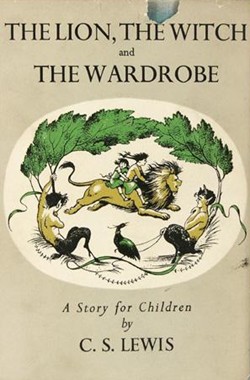
Often the first in that flood are those from the titles of the classics, like the wardrobe in The Lion, the Witch and the Wardrobe, the ring of The Lord of the Rings and the Faraway Tree in, well, The Magic Faraway Tree. Sometimes there are other iconic objects from the classics like the magic mushroom in Alice in Wonderland, the grandfather clock in Tom’s Midnight Garden and the book in The Neverending Story. Usually there are more recent ones like the Alethiometer in His Dark Materials or Percy Jackson’s sword, Riptide. Sometimes we get lost in the wondrous inventory of a single title, like Charlie and the Chocolate Factory, and I’ll be kept busy at the whiteboard with chocolate waterfalls, Television Chocolate, Everlasting Gobstoppers and the like. Of course one title – or set of titles – offers the best hunting ground, and normally the session contains a deluge of objects from the pages of Harry Potter, from the Invisibility Cloak and broomsticks, to the Marauder’s Map and Horcruxes. Very soon I am running out of whiteboard space, and I call for mercy.

And then we look at my scrawl, and congratulate ourselves on knowing an awful lot of magic. I try to make my fledgling magicians feel even more chuffed with themselves by telling them that if I had done the same thing with a room full of adults, the list would be no longer (perhaps shorter), and it would contain many of the same artifacts. Why? Because literature for this age group – our very own Middle Grade – excels at magical objects. Middle Grade is the heartland of the fantastical Thing. This is where we find the looking glasses and glass elevators and boxes of Turkish delight that fire our imaginations and refuse to leave us, that create an impression so vivid and fond that they enter our very definition of magic. Try it on your parents, I tell them, try it on your teacher! Ask them to name their favourite magical objects, and I wager that many if not most of them will come from books written for you.
Isn’t that exciting, I say, that it is the books written for you that create some of the most powerful magic. What does that say about your imaginations? Your capacity to create magic in your minds?

And isn’t that exciting for us, we who write some of these books, and work with them, and teach them, and read them with our children. Of course all this raises the question, why is Middle Grade so good at creating these magical objects? And how does it do it?

Well, I’m not sure there are definitive answers to those questions, and I wouldn’t presume to try to offer any, but I do of course have some thoughts on the subject. I have to have some thoughts – I’m still only half way through my workshop. It strikes me that Middle Grade occupies that happy and fertile ground between the unfettered imagination of young literature and the more sophisticated and realistic stories of YA and adult literature. Middle Grade can do imaginative – our lists prove that beyond a doubt – but the genre marries the richly imagined with sophistication and realism. Let me give some very quick examples.

Consider the moment Lucy first enters Narnia in The Lion the Witch and the Wardrobe. Lucy’s journey through the wardrobe is simply but carefully described so that it is immersive and real. As she enters the wardrobe, Lucy uses almost all of her senses, feeling the furs against her skin, smelling the mothballs, hearing the crump of snow under her feet, seeing the light of day somewhere up ahead. The whole episode is skillfully created to feel plausible, so that the magic itself is almost undeniable. It is an example of how even here, towards the younger end of Middle Grade, a more sophisticated narrative and a healthy dose of realism lift the magic to new heights.  

While we’re here in the wardrobe, it’s worth reflecting on the types of object that make the best magical artifacts. The wardrobe is a very good example of how something very everyday and real can be developed into something of extraordinary power, both in terms of magic and literary importance. It may be harder to make a wardrobe seem magical – and that’s where the skillful writing is very important – but when done as brilliantly as Lewis did it, it places a portal to another world in every house across the land. The wardrobe made Narnia seem close and accessible to us all. It is the very humdrum realism of wardrobes, mushrooms, rings, rabbit holes, looking glasses, peaches and train platforms that make them the ideal starting point for immersive magic. If the writing is good enough – and in Middle Grade it really can be – these real things make the magic immediate, tangible and very nearly true.

 
Realism can be achieved in other ways, of course. Take, for instance, the Alethiometer of His Dark Materials. Here the object is superficially ordinary: it is described as “very like a clock, or a compass, for there were hands pointing to places around the dial”. But in every other way, it is peculiar and extraordinary. The hands reveal the truth to the bearer by pointing to symbols around the dial, each of which has several meanings. The symbols are reminiscent of those from the Tarot and other cultural and historical sources – and so in combination they give the impression of the authority and wisdom of the ages. In this way the Alethiometer commands a very powerful and compelling magic not only for Lyra but also for the reader. In its sophistication and sense of heritage, it feels as though it really could be telling the truth. Other Middle Grade writers use complexity and heritage to give the sense of realism. Take for instance the construction and history of the Elder Wand in Harry Potter, or the very long and involved history of the One Ring in The Lord of the Rings. Again, the wonder of these objects is not only in what they can do, but also how in real they seem. And with such a rich and seamless history, how could they not be real?

And so, back in the workshop, we have talked about all this for a while, and it’s the kids’ turn to make some magic. This is where I bring out my prop: a box of Things. Now this is no ordinary box, it is a box from The Shop of Things, a creation of my own book The Bell Between Worlds. As such, the shop isn’t actually real, but those powerful imaginations are already hard at work and when I produce my old crate overflowing with straw, it hardly matters whether the shop is real or not, or indeed whether or not the class has read my book! They’re ready to believe. And then they come and take out their strange objects (which my family and I have collected from around the world), take them back to their tables and get to work. What do they have to do? Well yes, they have to imagine its magic, think about what it might do if spoken to, rubbed, sniffed, blown, dropped or thrown. But when they come to write this down, they also have to make it real. They write down what it looks like, sounds like, smells like – all those things – but they also capture its heritage, its story. They ask themselves who made it? Where? Why is it dangerous? Who is trying to steal it? Whose life has it saved? And suddenly, right there beneath the tip of their pen, the magical Thing starts to come to life.

It has been such a privilege to see what those imaginations are capable of – creations conceived so quickly and effortlessly, and yet many of which are worthy of the best Middle Grade fiction. As a writer in the field, it’s a reminder of how hard I need to work to be worthy of this inspired readership. The next time I sit down to create my own magical Things, I know they need to be very, very good. 

www.ianjohnstone.com

Saturday, 21 March 2015

Reading by Torchlight


True, it’s one of those clichés of a bookish kid – reading with a torch under the covers to avoid detection by a parent, but I’ll admit, I definitely did this. I was one of those bookish kids, like I’m sure many of you were, who took a book everywhere. And I mean everywhere – church, lessons, parties, friend’s houses, sports day… I always had a book in hand. Many a time I would fall asleep reading, book splayed over my face, or I would stay awake, late, trying desperately to keep reading and avoid detection, as well as figuring out how to breathe under the hot and sweaty duvet. Yet, somehow, there was nothing better than that thrill of reading late into the night and coming out of a book haze to realise that the house around you is completely still and quiet.

And those books have stayed with me. So many of them were classics, books that have stood the test of time. 

I remember my dad reading the Chronicles of Narnia to me, and that scene when Lucy walks out into that snowy Narnian wood is vivid to me, even now.

I remember recovering from chicken pox and being handed a load of my mum’s childhood books – What Katy Did, Pollyanna, Heidi, Little Women, 101 Dalmatians, and so many more.  I loved Five Children and It and The Phoenix and the Carpet. I loved Anne of Green Gables and read as much of the series as I could find.

I remember spending many a sick (and well) day, curled up in bed, rereading  the Famous Five adventures, Malory Towers, and the St Clare’s books. Returning to them was like revisiting old friends, old friends who I knew wouldn’t change or desert me. 

some old favourites
These books are all still in print and children still read them these days, which I’m glad to see. There is a reason after all these books are children’s classics, and while some of them contain those rather Victorian morality tales, which can be uncomfortable for a modern reader, it doesn’t really matter. After all, when I was a child, it was the story, the characters, and the settings that mattered to me. And many of them were set in a world that I couldn’t possibly understand, one that was so foreign to me that it washed over me, but at the same time, I related to them. I loved them. I wanted to go on those adventures too; to find smugglers, and strange creatures in the sand, flying carpets, and so much more.

The books you read as a child really do stay with you, and they are certainly the reason I wanted to become a writer. I wanted to be one of those people who wrote these magical stories and created whole worlds and adventures. There couldn’t be anything better, especially if I couldn’t be one of those children (and anyway I didn’t think I’d be brave enough) – I didn’t think anyway. 

From time to time, I still pull these off my shelves to reread or leaf through. Some sit proudly on my shelves still, while others I have to pull out from the back of my cupboard (mainly due to space restraints).  But they’re still there, and I still think about these books regularly. 

a small portion of my shelves
These books are important. And I’m glad they’re still read and will be passed on. They’re important influences I’m sure on many writers and readers.

But most importantly, they’re books about children and children don’t change – even if the world has moved on and times have changed, and children have mobile phones and TVs and computers. Everyone can recognise themselves somewhere in these tales – whether it’s as the uncertain orphan Anne, who tries to please everyone, or the adventurous Famous Five who long to get rid of all adults and make their own adventures. There is an element of fantasy in these books – after all, none of us expect to fall into wild adventures with smugglers and kidnappers, but we enjoy reading them and casting ourselves in those roles. And it gives us a chance to do that – to be a part of that world that we know we will never be a part of. As much as these stories are tied down with morals, they’re also an escape, and there’s absolutely nothing wrong with that.

It was great to read recently the magnificent Five Children on the Western Front, which won the Costa Children’s Book of the Year. It inspired me to go back and reread those old favourites, starting with Five Children and It. I’m keen to read all those ones I accidentally missed out on too, or the ones where I know I saw the film adaptation, but I don't know if I ever did read the book. It was recently announced too that Jacqueline Wilson is writing a modernised version of What Katy Did, called Katy, and it will be published later this year. I'll certainly be interested to see how she updates this classic, Victorian tale. Jacqueline previously wrote her own modern take on Five Children and It too.

While I love all the new Middle Grade fiction that’s coming out – much of it inspired by those classic tales - today I implore you all to go and read a classic, and let’s get talking about classics!

Which classics do you remember fondly? Have you reread any of these recently? Which were your favourites? How much reading by torchlight did you do? 


Friday, 13 March 2015

Review: Diamonds and Daggers by Elen Caldecott

Piotr Domek was pretending  not to look. He sat with his back to the salon window, pretending he hadn't a care in the world, pretending this was any other regular, normal, ordinary kind of day. He wasn't watching the street outside. No way. He couldn't let Minnie think that. The only reason he had the mirror angled in his hand was because he was checking his fringe. He wasn't using the mirror to keep a careful, fixed, watchful eye on the street. Definitely not.

Published by Bloomsbury in February 2015
Pages - 216

Summary

Hollywood sensation, Betty Massino, has come to star in the theatre down the road and Piotr and his friends Andrew and Minnie couldn't be more excited! But when the famous actress's hugely expensive diamond necklace goes missing, Piotr's dad, a security guard at the theatre, is a prime suspect. Soon, Piotr faces the very real threat of being sent 'home' to Poland. With the help of Sylvie and her twin sister Flora, can Piotr, Andrew and Minnie solve the crime or will they lose Piotr forever?

****
 The name Elen Caldecott is synonymous with the modern Middle Grade mystery. When you pick up one of Elen's books, you know you are in for a thrilling adventure,  as you discover the secrets to the situation. Her latest book, Diamonds and Daggers is no exception. This is the first in a brand new series set in Marsh Road, which is based on a Lower Marsh in Lambeth, a street the author knew well. The author's familiarity with it is  clear as you read the book, as Marsh Road comes to life as  a character in its own right. It vibrates with life as you follow the street from dawn till dusk and you are quickly familiar with its day to day cycle, complemented by the fantastic map drawn at the beginning of the book.
The Marsh gang come together for the first time in this book and what an interesting bunch they are. Each  child stands out uniquely, coming from varying cultures and backgrounds, creating  a fabulous multicultural feel to the story. They quickly settle any differences they may have, showing that friendship always wins in the end.
I love the plot. I loved the idea of this huge American actress coming over and the reactions from everyone in town. It was like a MG version of Notting Hill. I thought having the story centred around a theatre was a thrilling idea. You can almost imagine yourself sitting in the audience, nervously anticipating the curtain going up.
You can't talk about this book and not mention the illustrator, Nathan Read. On the cover of the book, he has really brought the characters to life, creating identifiable characters that easily match Elen's descriptions. He is also responsible for the drawing of the map as well as the design of the stats cards at the back, which I am sure every kid will love. Who ever came up with the idea of the stats cards, really knows the Middle Grade market.
The book is told from varying viewpoints, but the story is mainly about Piotr, who might end up living back in Poland, if they can't solve the mystery of the missing necklace. His father is already fed up with the way he gets treated for being Polish, so it isn't surprising that he wants to leave the UK, returning to his own country, when he becomes a suspect in the burglary case.
This book gives us a modern day Famous Five, who I hope will be around as long as the originals. I'm pretty sure Enid Blyton would be praising Elen Caldecott for keeping mysteries fresh and original and in the forefront of children's fiction.