Every year since 2010 I have posted a list of my favourite books of the year over at my blog, The Book Zone (For Boys). This year, that list is going to appear first here on MGSB, albeit missing a small number of YA books that I loved in 2015.
This originally started out as a Top 10 of 2015 post, although I had a nagging feeling that this might not be as easy as I originally thought as 2015 has been a tremendous year for mg books in the UK. A quick look back through my goodreads account showed a huge list of MG books that I have given 5 stars to in 2015, so I've had to engage my brain even more to decide which among all those A Grade books should be elevated to the equivalent of the GCSE A*.
And so, in no particular order, other than to leave my personal favourite middle grade book of 2015 to the end, these are the books I truly loved in 2015:
Bloodstone by Allan Boroughs
The sequel to the author's 2014 debut, the fabulous Ironheart. It's a hugely enjoyable action/adventure story in a post-apocalyptic setting filled with wonderful characters.
Fire Girl by Matt Ralphs
In Fire Girl, author Matt Ralphs has created a thoroughly entertaining blend of alternative English history and thrilling magical fantasy. Everything about this book is great: the plot, the pace and above all the characters. Special mention should also be given to Bramley the dormouse and one of my favourite lines of the year: "That's it, witch-child, burn it all down!"
The Blackthorn Key by Kevin Sands
A thrilling middle grade historical mystery story set in Restoration London. The Blackthorn Key is perfect for lovers of mystery thrillers, and young readers will find the London of 1665 brought completely alive for them as they race through its back streets and alleyways with the young protagonist, Christopher.
Demolition Dad by Phil Earle
A cracking middle grade British comedy stories, in a similar vein to Walliams and Dahl. It is laugh-out-loud funny and chock full of wonderfully engaging and endearing characters, elements that should make this a guaranteed hit with young readers.
Alfie Bloom and the Secrets of Hexbridge Hall by Gabrielle Kent
The last 18 months has seen a number of children's books featuring magic and adventure. Alfie Bloom and the Secrets of Hexbridge Hall is, in my opinion, easily the best so far. It has shapeshifters, mythical creatures, time travel, ancient druidic magic, a rather splendid and mysterious butler, and the wonderful Hexbridge Castle itself - almost a character in its own right.
The Wolf Wilder by Katherine Rundell
Katherine Rundell did not disappoint with her first book to be published since the multi-award winning Rooftoppers. A future classic is a phrase too often used these days, but rarely has it been more deserved than when applied to this thrilling, humorous and heart-warming story.
Urban Outlaws by Peter Jay Black
This year has seen the release of two books in Peter Jay Black's thrilling Urban Outlaws series, Blackout and Lockdown. With its blend of heists, action and hi-tech adventure, this exciting, hi-octane series has now become one of my favourite series of the last year or so.
Murder Most Unladylike mysteries by Robin Stevens
This is another current favourite series that has seen the release of two books this year, both of them even better than last year's fabulous Murder Most Unladylike. Arsenic for Tea introduced us to Daisy Well's wonderfully dysfunctional family, and then First Class Murder took the two girls on murder-filled journey on the Orient Express. Jolly Foul Play is one of my most anticipated reads of 2016.
The Mystery of the Clockwork Sparrow by Katherine Woodfine
Middle grade mystery stories are enjoying something of a renaissance at the moment, led of course by Robin Stevens. With her debut, The Mystery of the Clockwork Sparrow, Katherine Woodfine has leapt into the fray. The setting of a new department store in Edwardian London is wonderfully realised and the perfect location for this thrilling mystery adventure sotry.
Hamish and the Worldstoppers by Danny Wallace (illustrated by Jamie Littler)
The past 18 months have seen a much greater number of middle grade books published with accompanying illustrations. Danny Wallace's debut for kids, Hamish and the Worldstoppers, is my favourite of those published in 2015, both in story and artwork. It is the kind of book that has something for everyone: action, adventure, humour, fantasy and brave kids fighting battles against nasty monsters from another dimension.
The Imagination Box by Martyn Ford
This modern, exciting and very funny take on the classic genie-in-the-lamp tale still has me chuckling now when I think about it, many months later. You see, it has a talking finger monkey called Phillip, and it's worth reading purely for this. However, if you expect more from your books than a talking finger monkey called Phillip, then it is also a thoroughly entertaining, funny mystery adventure story.
And my favourite middle grade book of 2015 is (and this will come as little surprise to some as I have been signing its merits all year):
.
.
.
.
.
.
.
.
.
.
.
The Dreamsnatcher by Abi Elphinstone
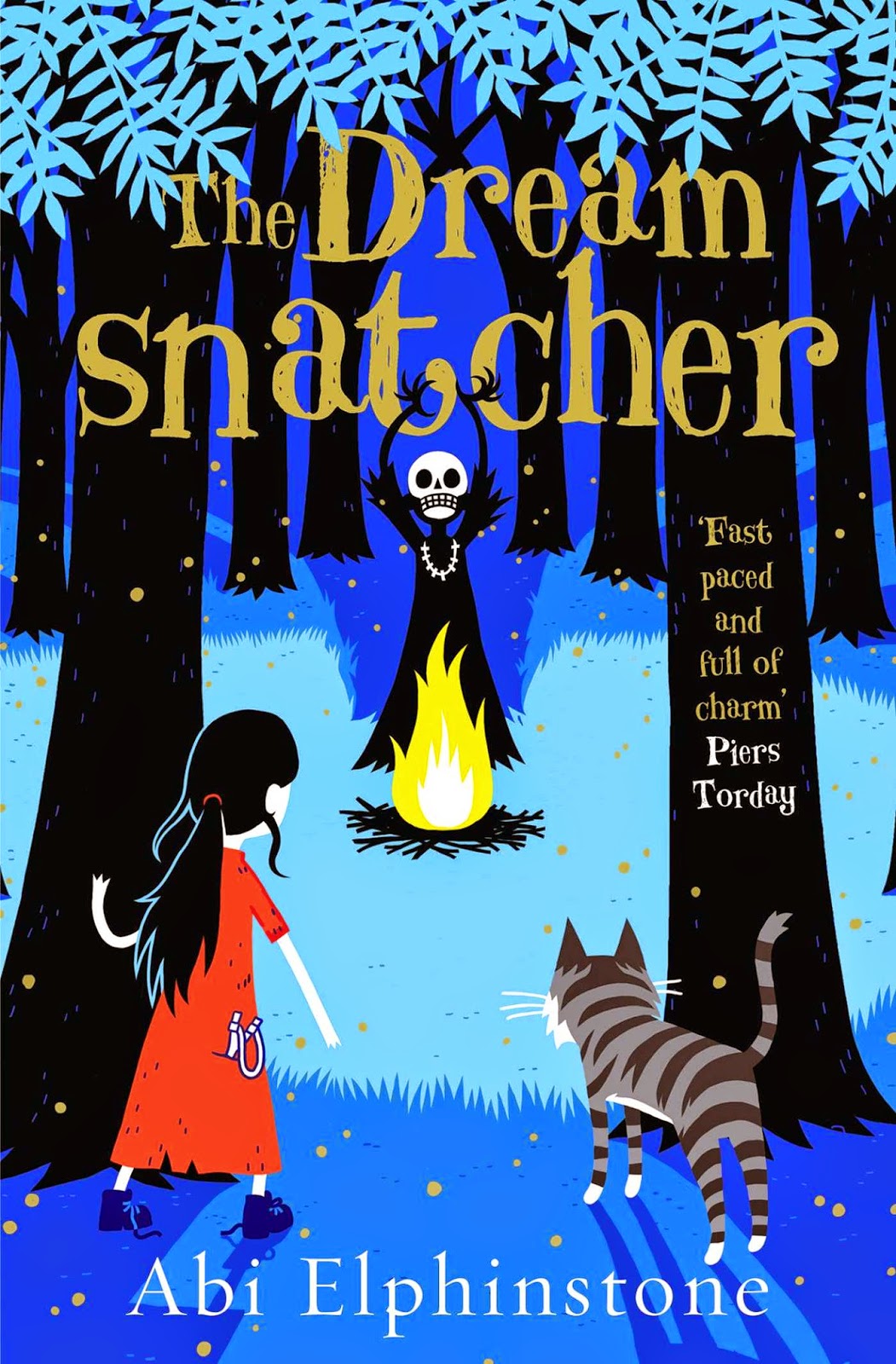
I have heaped so much praise on this book over the past year that I am finding it difficult to find any superlatives that I have not already utilised. Simply put, in a year when there have been so many fabulous middle grade books published in the UK, Abi Elphinstone's debut, The Dreamsnatcher, still manages to stand head and shoulders above the rest. The sequel, The Shadow Keeper, would be the book I am most looking forward to reading in 2016 if I hadn't already been incredibly fortunate to be sent an early proof. Needless to say, when it arrived I dropped everything to read it, and hand on heart, I can honestly say it is even more wonderful and magical than The Dreamsnatcher.
Showing posts with label middle grade. Show all posts
Wednesday, 30 December 2015
Tuesday, 1 December 2015
Top 10 Tuesday: 2016 Debut Middle Grade Novel We Are Looking Forward To
Top Ten Tuesday is an original feature/weekly meme created at The Broke and the Bookish. Today some of the MGSB team have each chosen a debut MG book that they are most looking forward to.
1. Elen Caldecott - Captain Pug by Laura James
I have to confess to a partisan interest in Laura's debut, she was a student at Bath Spa Uni where I teach. I didn't see this book though, which was acquired by Bloomsbury shortly after Laura graduated. This series will be illustrated by Eglantine Ceulemans and I've seen some sketches which are just wonderful; comic, but full of heart, just like the other work of Laura's I've seen. Out May 2016.
www.elencaldecott.com
2. Clare Zinkin - Beetle Boy by MG Leonard
Another confession, the book proof for this landed on my doormat quite recently, and although I haven't read it yet, I am looking forward to devouring it over Christmas. The first paragraph (sneaky peek) reads like a dream, and the premise - a missing father, beetles, museums - I already know of children who will pounce on it!
www.MinervaReads.com
@minervamoan
3. Tatum Flynn - Secrets of the Dragon Tomb by Patrick Samphire
12-year-old Edward Sullivan is used to looking after his eccentric family in the face of malfunctioning clockwork butlers and stray pterodactyls.
But throw in a lunatic archeologist, kidnapped parents, spies, deadly hunting machines, and a chase through the Martian wilderness, and things are about to get crazy.
A funny adventure story with all of the above AND set on Mars?? CANNOT WAIT.
www.tatumflynn.net
@tatum_flynn
4. Kieran Fanning - The Great Chocoplot by Chris Callaghan
Imagine a chocopocalypse - a world in which chocolate is running out! Doesn't bear thinking about. But don't worry, because chocolate fan, Jelly, is on the case. Can she solve the great chocoplot?
Chris is a great guy, and very funny too, and I for one am looking forward to his debut.
www.kieranfanning.com
@KieranJFanning
5. Claire Fayers - The Ministry of SUITS by Paul Gamble
Of all the books I am desperate to read next year, I am most desperate to read this. Jack and Trudy are the newest recruits in the Ministry of Strange, Unusual and Interesting Things, where they find out that the world is much stranger than they'd previously believed, and also contains more pirates and dinosaurs. I caught a brief glimpse of the review copy of this several weeks ago and I'm still laughing. It's due out in July but I'm planning to steal that review copy back because I genuinely can't wait that long.
https://clairefayers.wordpress.com
@clairefayers
6. Lara Williamson - Beetle Boy by M G Leonard
This book promises humour, adventure and science and I can't think of a better mix. Not only is the main character fabulously named, Darkus Cuttle, but he joins forces with a super species of intelligent beetles to find his missing father. Now, I'm no big fan of beetles but I am prepared to be amazed and astounded and I suspect I'm going to love those little creepy-crawlies by the time I've turned the last page. I love books that can make me look at things in a new way. So, roll on 2016 and let me discover more about beetles and Beetle Boy.
Twitter: @LaraWilliamson
7. Ruth Fitzgerald - The Voyage to Magical North by Claire Fayers
I have been hearing so many enticing bits and pieces about this book for ages and I'm so excited to read it in full. The main character, Brine Seabourne, sounds like a brilliant new, female lead and the book has pirates, magic, sea monsters and evil, talking penguins! Oh, I'm getting all excited again! I'm down for an ARC but it seems to be very slow in arriving, maybe that's because I'm very impatient but I suspect it's because it's one of those books no one wants to pass on!
Twitter: @writingruth
Only seven from us this week, but I am sure that if 2014 and 2015 are anything to go by then 2016 will also be a fabulous year for debut middle grade novels.
1. Elen Caldecott - Captain Pug by Laura James
I have to confess to a partisan interest in Laura's debut, she was a student at Bath Spa Uni where I teach. I didn't see this book though, which was acquired by Bloomsbury shortly after Laura graduated. This series will be illustrated by Eglantine Ceulemans and I've seen some sketches which are just wonderful; comic, but full of heart, just like the other work of Laura's I've seen. Out May 2016.
www.elencaldecott.com
2. Clare Zinkin - Beetle Boy by MG Leonard
Another confession, the book proof for this landed on my doormat quite recently, and although I haven't read it yet, I am looking forward to devouring it over Christmas. The first paragraph (sneaky peek) reads like a dream, and the premise - a missing father, beetles, museums - I already know of children who will pounce on it!
www.MinervaReads.com
@minervamoan
3. Tatum Flynn - Secrets of the Dragon Tomb by Patrick Samphire
12-year-old Edward Sullivan is used to looking after his eccentric family in the face of malfunctioning clockwork butlers and stray pterodactyls.
But throw in a lunatic archeologist, kidnapped parents, spies, deadly hunting machines, and a chase through the Martian wilderness, and things are about to get crazy.
A funny adventure story with all of the above AND set on Mars?? CANNOT WAIT.
www.tatumflynn.net
@tatum_flynn
4. Kieran Fanning - The Great Chocoplot by Chris Callaghan
Imagine a chocopocalypse - a world in which chocolate is running out! Doesn't bear thinking about. But don't worry, because chocolate fan, Jelly, is on the case. Can she solve the great chocoplot?
Chris is a great guy, and very funny too, and I for one am looking forward to his debut.
www.kieranfanning.com
@KieranJFanning
5. Claire Fayers - The Ministry of SUITS by Paul Gamble
Of all the books I am desperate to read next year, I am most desperate to read this. Jack and Trudy are the newest recruits in the Ministry of Strange, Unusual and Interesting Things, where they find out that the world is much stranger than they'd previously believed, and also contains more pirates and dinosaurs. I caught a brief glimpse of the review copy of this several weeks ago and I'm still laughing. It's due out in July but I'm planning to steal that review copy back because I genuinely can't wait that long.
https://clairefayers.wordpress.com
@clairefayers
6. Lara Williamson - Beetle Boy by M G Leonard
This book promises humour, adventure and science and I can't think of a better mix. Not only is the main character fabulously named, Darkus Cuttle, but he joins forces with a super species of intelligent beetles to find his missing father. Now, I'm no big fan of beetles but I am prepared to be amazed and astounded and I suspect I'm going to love those little creepy-crawlies by the time I've turned the last page. I love books that can make me look at things in a new way. So, roll on 2016 and let me discover more about beetles and Beetle Boy.
Twitter: @LaraWilliamson
7. Ruth Fitzgerald - The Voyage to Magical North by Claire Fayers
I have been hearing so many enticing bits and pieces about this book for ages and I'm so excited to read it in full. The main character, Brine Seabourne, sounds like a brilliant new, female lead and the book has pirates, magic, sea monsters and evil, talking penguins! Oh, I'm getting all excited again! I'm down for an ARC but it seems to be very slow in arriving, maybe that's because I'm very impatient but I suspect it's because it's one of those books no one wants to pass on!
Twitter: @writingruth
~~~
Only seven from us this week, but I am sure that if 2014 and 2015 are anything to go by then 2016 will also be a fabulous year for debut middle grade novels.
Monday, 28 September 2015
An Interview with Lara Williamson by Tizzie Frankish
When you lose someone, goodbye isn’t the end...
As a reader of 'heartbreak and humour' stories, I am delighted to welcome Lara Williamson author of A Boy Called Hope and her new book The Boy who sailed the Ocean in an Armchair...
An extraordinary story of courage, dreams and finding your way.
So, pull up an armchair * and join us on our journey where we navigate the tricky waters of 'second story' syndrome, ride the waves of writing for Middle Grade and sail with the silent snail who has a starring role.
* Jaffa Cakes optional
A Boy Called Hope
epitomises the phrase ‘Humour and Heartbreak’. Can we expect the same emotional
pulls from The Boy Who Sailed the Ocean in an Armchair?
I think you can. I’ve always thought humour and heartbreak
are very close. One minute you’re laughing and the next crying. I’d like to
think I take the character in the book on an emotional journey with lots of humour
and highs followed by lows, moments where it’s hard to see the way forward and
perhaps in some cases no way forward at all. Then by the ending I leave that
character happy; knowing that they’ve grown in some way and they’re stronger
for the experience.
How did Becket find
you? Did he surf into your subconscious and appear fully formed or did he sail
around the side lines for a while?
I was on a writing course and we were writing a piece that
could be the beginnings of a new book. To be honest, I didn’t really have an
actual book idea but what I did have was an image inside my head that would not
go away. I could see an ocean and there was an armchair sailing on it with two
brothers aboard. Each was comforting the other as they negotiated turbulent
waters towards their destination. Instinctively, I knew that it wasn’t just
about the destination but the journey. The title The Boy Who Sailed the Ocean
in an Armchair came to me that day and never changed. Basically, I wrote the
book around that image I had in my head.
I love Ninja Grace
(Dan Hope’s word-witty sister) and Charles Scallybones (Dan’s chewing-spewing
dog). What roles do Billy (Becket’s brother) and Brian (Billy’s pet snail) play
in The Boy Who Sailed the Ocean in an Armchair?
Billy is Becket’s little brother and the relationship
between them is important. As their mother has died Becket is trying to take
over her role in looking after his little brother, in telling him stories to
comfort him when things are hard. Family is everything to me and in both my
books they end up being the glue that binds everything together. When I wrote
the first draft of The Boy Who Sailed the Ocean in an Armchair I didn’t have
any animals and I realised I missed having one. It would have been obvious to
have a cat so I went for something completely random and ended up with a snail.
And I actually love that snail because he says and does nothing but in the end he
has an important role to play.
So far, the
characters in your books (Dan in A Boy Called Hope and Becket in The Boy Who
Sailed the Ocean in an Armchair) are boys. Where do you find inspiration for
these authentic characters?
I think I tend to write stories from the heart whether the
main character is a boy or a girl. Everyone knows what it feels like to be
rejected or lonely or to suffer loss, sadness and happiness and that’s usually
the starting point for me. From there the character grows and blossoms.
We often hear of the
trials and tribulations of ‘second story syndrome’. Was writing The Boy Who
Sailed the Ocean in an Armchair a difficult process for you and how much did it
differ from writing your first published book?
Not that I’m an authority but I imagine each book can throw
up its own set of problems. With the first you have the luxury of time and so
you might spend years writing it and then still have the time to set it aside
and come back later with fresh eyes. The second book is going to be to a
deadline and so that is guaranteed to make it feel different. Also, you want
the second to be as good, if not better, than the first. But I have enjoyed
writing both books for different reasons and now I’m really looking forward to
the third. Wait… is there a third story syndrome?
You will have to come back and let us know. Both your books are
for the 8-12 age group. What is it about writing for this age that appeals to
you?
To be honest, I’ve never really grown up and I’m still about 8-12 inside my head so it feels pretty natural to write for this age group. In
fact, I have really strong memories of my childhood and it was a time when I
felt like I had the whole world ahead of me, anything was possible. Not that
everything was totally perfect, but it was
magical to me in many ways and I want to hold on to that feeling for ever.
Writing for this age group allows me to do that.
Are you a plotter or
a pantser?
Panster! I have a beginning in my mind and I know the ending
but I like to be surprised in the middle. For me, if I plotted everything with
precision I might not enjoy any little twists and turns that unexpectedly come
my way. That’s not to say that while I’m on the journey I don’t go to a dead
end and have to back track and find another route and that takes up valuable
time. I’ve realised I’m very much the same in real life. For example: if I’m on
a motorway and there’s a jam I would rather turn off and get lost going around
little villages in order to get to my destination. And I will reach the destination, it might take me longer, but the journey
will have been all the more exciting.
You have talked about
re-reading your diaries from when you were growing up (my toes are curling for
you!). Do you think writing diaries was where your love for writing began?
I’ve tried to think of a time when I didn’t write or draw
and I can’t remember one. Even from a
young age I was writing little stories and illustrating them. My primary school
had a shield for the best handwriting and winning it was one of my proudest
moments. Still is. And when I wasn’t writing I was making up plays with my
friends and putting them on. At the age of ten I started keeping a diary and
kept one until I was twenty-one and I’m so happy I did. Now I realise, looking
back, that there are things in my diary that inspired me to write both books.
And they’re not life changing things either they’re just random things like the
dog chewed my favourite rubber ball (does that remind you of a certain dog in A
Boy Called Hope?).
Whatever happened to
Julie and Jenny of Lakeview School? Will their story ever be finished?
Ah, lovely Julie and Jenny of Lakeview. This was the first
book I ever wrote aged ten and I think I was inspired by St Clare’s and Malory
Towers. Thing is, I didn’t have the first clue about lacrosse or boarding
schools and so I eventually ran out of steam after a few chapters. Tempting as
it is to bring back Julie and Jenny and their shenanigans at Lakeview I feel
that they have served their purpose. That being they prepared me for writing a
book later on in life and for that reason alone I shall always have a soft spot
for the pair of them.
Finish these
statements:
If I wasn’t a writer,
I would be a dancer. As a child I imagined I was a ballerina despite never
taking a ballet class. Now I tap dance and although I’m never going to set the
world alight with my fancy footwork I imagine I’m on Strictly Come Dancing when
I dance. Ah, isn’t imagination wonderful?
My favourite thing
about being an author is everything. Writing allows me be anyone or
anything, to live in any world of my own making. How lucky to be able to say
that you can daydream and get paid for it. And then to have people read and
connect with your words is amazing. I will never stop being excited about this.
I write best when I am at my desk by 9.30 with a cup of
lemon and ginger tea (with biscuits nearby).
Growing up, I wanted
to be a forensic scientist or a
fashion designer.
My special talent is wiggling my ears, raising one eyebrow
and flaring my nostrils. Yes, I have a very flexible face.
My favourite form of
potato is chips.
My word of the day is serendipity. When you’re writing and
you get a moment of serendipity it’s the best.
If I could be a
character from any book, I would be Moon-Face from The Enchanted Wood.
The character in my
next book is called… I’m going to
leave you wanting more by saying you’ll have to wait and see.
Untill then... fill the wait by reading The Boy Who Sailed the Ocean in an Armchair, which is published by Usborne on 1st October. Paperback £5.99 or click on the link below.
Becket Rumsey
is all at sea.
More
than anything he needs to say goodbye to a loved one.
His dad has run away with him and his brother Billy in the middle of the night. And they’ve left everything behind, including their almost-mum Pearl. Becket has no idea what’s going on – it’s a mystery.
So
with the help of Billy and a snail called Brian, Becket sets out on a journey
of discovery. It’s not plain sailing but then what journeys ever are?
When
you lose someone, goodbye isn’t the end. There is no full stop. It’s just the
beginning of a new and different journey. Then again, that’s something Becket
needs to discover for himself.
http://larawilliamson.weebly.com/
Thank Lara for taking the time to answer our questions. Happy writing!
Interview by Tizzie Frankish
www.tizziefrankish.com @tizzief
Wednesday, 24 June 2015
Why I'm going back to the classics...for a while
Hi!
Over the past two years I've spent oodles of time trying to read as many new books as possible,
and review my favourites, mainly to help
me remember the details! As a slushpile writer on a mission to Get Somewhere,
I've been very conscious of what agents and publishers are currently looking
for. I've spent hours researching how to get to grips with the obligatory
"Show, Don't Tell" and I've acquainted myself with the market's
bestsellers. The amazingly original and
exciting books that I've read have brought me and my children lots of joy and
fun. Thank goodness we have a constant supply of new ideas and authors coming
through.
It is confusing though. I've read my own children every single
one of David Walliams' thoroughly entertaining books. Somehow these
bestsellers have a really old-fashioned
feel, but I love them! Walliams' style feels so warm and comforting and
familiar, and in a Dahl-esque
manner he whips us from the horrific to
the absurd in the flick of a page turn. Tell the truth, I've missed that kind
of story telling. They're so good to read aloud, and even better to listen to.
So now I'm hankering for some proper Old Skool Classics that have stood the
test of time. And by "classic" I don't necessarily mean old, I mean
books that will be loved from generation to generation and stand the test of
time.
Whenever I visit local bookshops, I'm struck by just how many
books in the 8-12s section are largely the same books that I was plugging 15
years ago as a Year 6 teacher. I'm talking the likes of Harry Potter, Northern
Lights, Kensuke's Kingdom and Matilda. A quick look at the British Libraries PLR listings reveals that the most borrowed children's authors Top 20 still
includes Roald Dahl and Enid Blyton, and in the Top 20 most borrowed classic authors you'll also
find CS Lewis and Beatrix Potter.
There's a steady supply of new editions of the classics it seems- each
new cover design seems to cause a stir!
One thing that bugs me as a teacher is that children tell me
-all too often- that their parents won't let them read the books they want to,
deeming them 'too easy', or 'not good
English'. I've overheard parents at the supermarket trying to persuade their
children to buy books or magazines that "teach them something" rather
than the ones the child is drawn to. And
I recently joined in a teacher's hashtag about reading, where teachers were recounting the lack of time in
the school day to read for pleasure.
'Up-levelling' is where it's at, and being able to prove a pupil's
progress to Ofsted inspectors. Fads and
fashions in the publishing world may come and go, but teachers and parents
often seek the confidence of known quantities when it comes to reading
material. Not to mention guaranteed value for money. As adults we love to share our own childhood favourites
with the next generation, and these are often what we select as special gifts.
For busy teachers there is a much greater wealth of resources for more
established authors to enrich and support their lesson plans, so who can blame
them for picking more classic texts to use in class? Canny debut authors, I notice, are putting
resources for teachers on their websites- a good move!
This set me thinking, as lately I've been reflecting upon
what I want to achieve with the Middle Grade books that I'm currently writing,
and indeed, what is at the heart of Middle Grade fiction. Is it the characters?
The plot? The voice? I often wonder why I've focused on writing for this age
group above all others, and always reach the conclusion that this was the age
when I was happiest in my reading, and found stories most satisfying.
So, I've decided to embark on a journey back through time,
and revisit the books I enjoyed as a junior reader (as we called it back in Ye
Olden Days) . A couple of months ago I re-read Madeleine L'Engle's "A
Wrinkle in Time" and it brought back the thrill and excitement of
disappearing into a whole new imaginary world, just as when I'd read it as a
youngster. But yes. The world is very different now with technology and social
media, and kids being much more knowledgeable and worldly wise. On the other
hand though, the relevance and importance of things like relationships with
friends, siblings, parents, and the dull oppression of homework hasn't changed
much. Kids still have days when they're gleeful, and days when they're sad.
This led me into thinking that if I re-read books from my
school days, could it help me re-connect with my Middle Grade self? Maybe, if I read my favourite books from
childhood , I'll be able to resurrect long dismissed memories. Maybe I'll hit upon a cerebral shortcut to the Land
of Long Ago, which will magically help me write a more sparkly authentic voice
for my intended audience.
Over the weekend I was looking out for interesting tweets
from the Winchester Writer's Festival, and a lively selection kept popping up.
One that caught my eye was a quote from Beverley Birch saying, "as an
author do not bandwagon hop. Write what's in your heart ".
So, without apology I'm going back to my favourite
characters: Ramona, Laura Ingalls Wilder, Anne of Green Gables, Mary Poppins.
I'm going to scrutinise The Wolves of Willoughby Chase, and Nothing to be
Afraid of. I'll be analysing The Borrowers and Ballet Shoes and The BFG. I admit that -unlike my younger self- I'll be
tutting at the liberal sprinkling of adverbs, and the naughtiness of the
lengthy backstories, but that will be part of the fun. Over the next few months
(before I get back to reading all the latest bestsellers) I'll be seeking to
pinpoint what the essence of a truly
great Middle Grade book is, so that I can bottle it and keep it close to my
heart as I'm writing.
I just hope (with writerly wishfulness) that I will discover the Holy Grail of what makes
these evergreen books so endlessly appealing, and will one day be able to
achieve a little of the classic magic in my own stories.
Pippa Wilson
Sunday, 21 June 2015
Father's Day: The Best Dads in Middle Grade Fiction
Today is Father's Day in the UK, and a number of our wonderful team have each selected their favourite father from middle grade fiction (no prizes for guessing which fab dad might appear twice on our list).
Sophie Reid: Mr Weasley from the Harry Potter series by J.K. Rowling
It would be hard for me to complete any list like this without a Mr Weasley mention and he was the first MG dad who came to mind. We don't meet Mr Weasley until the second book, but we already know a bit about him - namely that he has enchanted a muggle car to fly. Mr Weasley's reaction to this is hysterically different to Mrs Weasley's, and we soon learn how different the pair are. Mr Weasley is obsessed with Muggle technology and gadgets, desperate to learn the function of a rubber duck, and how planes stay up. Although he is the easier going of the Weasley parents, he still cares deeply for all his children - and Harry, and treats them all just the same, no matter what. I am grateful that J.K. Rowling decided to save Mr Weasley from his death!
Twitter: @sophs_3
I don't even know what to say about Mr Bagthorpe. He's the best character in this series, which genuinely makes him one of the best characters in books anywhere. He's pretty much explicitly bipolar which is interesting, but also egotistical, aggressive, frustrating, anything but affectionate to his family, and yet the one you more or less end up gunning for against all the others. He describes himself as 'the Archetypal Can-Carrier of All Time.' I would love to think that one day I might write someone as funny as Henry Bagthorpe.
The opening lines of Dylan's diary are: 'My dad, right - ask anyone this, they'll all say the same - my dad can fix anything. Toyota. Hyundai. Ford.' But later Dylan admits, 'it's not just cars.' And how right he is. While on holidays, Mr Hughes rushes back to the caravan for a kettle of boiling water to warm up the sea for his children. When renowned local Ninja Turtles fan, Daft Tom holds up the Hughes' filling station in a balaclava and Ninja Turtles bicycle helmet, Mr Hughes doesn't call the police but offers Tom sweets and eventually a job. As a result, Tom turns his life around. 'So that's another thing Dad fixed - he fixed daft Tom.' Mr Hughes biggest challenge comes when the family face a financial crisis, but with the help of his kids, Mr Hughes does what it takes to make things right. Frank Cottrell Boyce does the father/son relationship brilliantly in Millions and Cosmic, but Mr Hughes will always be my favourite of Boyce's literary dads.
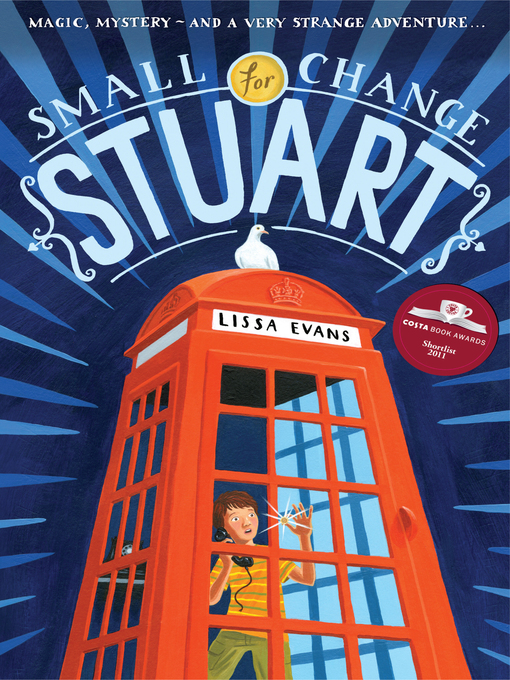
Stuart Horten’s dad is ‘quite old’, outlandishly tall and permanently distracted by his job of writing difficult crosswords. And he’s incapable of using simple language - going for a walk is a brief perambulation and breakfast is a morning repast – all delivered at full volume. Stuart’s dad is frankly embarrassing.
Stuart’s struggles to understand his dad and his flowery language are a source of much humour and the wordplay is rich and interesting. But when Stuart and his dad find themselves trapped inside a magical maze, it’s only by teaching his dad to speak words of one syllable that will get them out. It’s a clever and funny scene where Stuart’s frustrations are replaced with the understanding that his dad’s over the top language is a part of who he is; panic when it looks like this trait might have gone forever and finally relief when Mr. Horten returns to ‘the usual mad long stuff’ that Stuart doesn’t understand. It’s an empathetic and gentle moment in a fast paced adventure that shows funny books aren’t only for laughs.
As Dahl famously declared, all children deserve a parent who is SPARKY - and William is certainly that. Many MG books sideline adults, so DANNY, which is really a tale of a boy and his dad's loving and fun relationship, makes a lovely change. These days, taking your child along on larcenous expeditions to poach peasants would probably get you called out by Child Protective Services, but this book is a delight, and as a child I adored how furious William was with Danny's nasty teacher, how they shared midnight feasts, and how they got one over on the dastardly Mr Hazell.
Henry Brown isn't Paddington's dad and in fact is at first the most resistant to taking the Peruvian orphan in. His status as serious bowler hatted city bread earner of the family is undercut from then on, delightfully and charmingly, by the marmalade chomping newcomer's antics. But although he is teased, and Paddington himself often"saves the day" after causing the chaos to begin with, the ponderous and bumbling but ever tolerant Mr Brown is always there as the ultimate safety net for our hero's adventures.
Best dad? I’d have to say Commander Caractacus Pott, charismatic inventor of what also happens to be the best car in children’s literature, Chitty-Chitty-Bang-Bang. Ian Fleming wrote the book for his son, so I like to think of the Commander (with his cool gadgets and high speed getaways in his astonishingly versatile vehicle) as James Bond’s eccentric relation. He’s since had a make-over by Roald Dahl and Frank Cottrell Boyce, but for me he lives on through his fatherly advice: ‘Never say 'no' to adventures. Always say 'yes', otherwise you'll lead a very dull life.’
Cathy Cassidy writes great dads. I love Daizy Starr's mad dad in the Daizy Starr series, he jacks in his teaching job and follows his dreams, one crazy scheme after another, none of which ever work out successfully. Or Scarlett's lovely dad, who tries so hard to stay patient and suppotive in the face of her rebellion. However my favourite Cathy C. dad is Dizzy's. He is a single parent looking after his daughter while her mum goes AWOL for eight years. He makes her cheese on toast and milkshake for her birthday breakfast and worries about school and swimming galas. Without spoiling the plot, he really doesn't desereve all the anguish he's put through!
Big Dave isn't Dan's biological father, but throughout Dan's journey to understand why his dad left, Big Dave is there and the bond the two form by the end of the story is incredibly moving. It is brilliant at showing how families can work when they've got step-mums and step-dads. It also makes it crystal clear to children that their family, which may feel like a bits and pieces family, is perfect for them, and if they are having problems, never to give up hope.
He has got to be the best dad ever. He's loving, he's just irresponsible enough that Danny feels grown up, and he's a modern day Robin Hood. Perfect dad. Poachers are way sexier than Gamekeepers, and when Danny devises the perfect way to poach, his dad is really proud of him. He made me want to be a dad.
Thursday, 11 June 2015
Poll Results: The Best Middle Grade Books Of The 21st Century
Back in our launch week, which seems like years but was actually only
just four months ago, SF Said wrote a brilliant
piece for MGSB questioning why there were no books for children or young
adults listed in a (then) recent poll organised by the BBC to discover the
best books of the 21st Century. We decided that we would run our
own poll on MGSB to find out which middle grade books our readers and
contributors felt were worthy to appear in list of the best children’s books of
the 21st century so far. We intended to get the results out soon
after we closed the poll, but one thing led to another and life has been pretty
crazy, so apologies for keeping you waiting.
Before we present the results, I need to explain a decision that we
have made regarding the votes. Over the weeks following the poll there were
quite a few Top 10 lists appearing across various forms of the media, leading
to much discussion regarding their relevance, with some commentators questioning
this need to rank books and authors. We have therefore decided that we are not
going to give any individual scores, nor are we going to name books that scored
much higher than others. Instead we decided that any book that received three
or more votes would deserve a place on our list, which we would present in chronological
order of the books’ release dates.
A few points before we reveal the list:
- Louis Sachar’s Holes received a good number of votes but was published in 1998 so does not qualify in this instance (even if it is a flippin’ great book).
- A number of the Harry Potter books received more than the requisite three votes. Some of these books were published pre-2000 so do not qualify for the list. In the interest of keeping things balanced we have only included the Harry Potter book from the 21st Century that received the most votes.
- All three books in Philip Pullman’s His Dark Materials series received more than three votes, but as SF Said pointed out at the time of the poll, Pullman intended for the trilogy to be seen as one complete story, and the third book in the trilogy was published in 2000 so qualifies as far as we are concerned.
- The Knife of Never Letting Go by Patrick Ness scored well, but as it is a YA book it does not qualify for this poll.
And so on with the results:
2000
2001
2002
2003
2004
2006
2007
2008
2010
2011
2012
2013
2014
(Note: In the case of His Dark Materials and the Harry Potter series, The Amber Spyglass and Harry Potter and the Goblet of Fire each received the most votes out of those voted for from their respective series)
I think you will agree that this is a pretty incredible list of books that every lover of middle grade fiction should read (I’ll be honest – there are a handful that I need to add to the ever-towering TBR pile now). We would love to hear your thoughts on the results. Did your favourite make it to the list? Are there any glaring omissions? And what about 2005 and 2009? Were they particularly dry years for quality children’s fiction?
Big thanks to all who took the
time to add their votes to the poll.
Subscribe to:
Posts (Atom)